

Do you know the name of your local government chairman?
Be honest. For many people, the answer is no.
Yet, local government decisions affect many of the things we encounter every day: the roads we use, the healthcare centres we visit, the markets we rely on, the schools in our communities, and many of the services we need. So, if we do not know who is responsible for what happens in our communities, how do we hold those responsible accountable? Beyond knowing who is responsible, what does it really take to make policies, programmes and services work where people really need it the most, at the last mile?
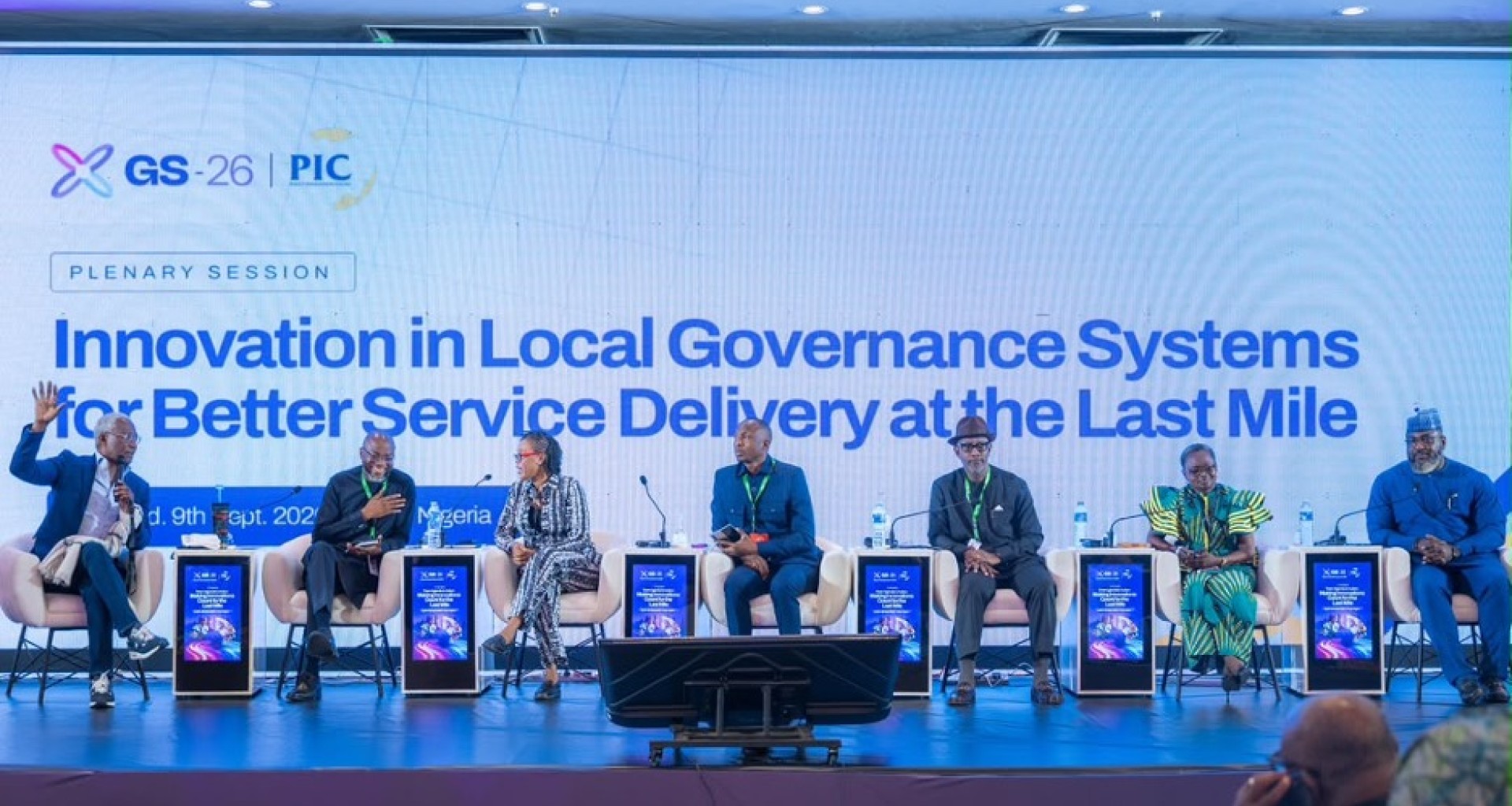
This was one of the questions explored at the 2026 Gender and Inclusion Summit (GS26), where experts examined innovation in local governance systems for better service delivery at the last mile. But before we can improve outcomes at the last mile, we must understand what the term actually means.
What is the Last Mile?
The last mile is not a place. It is the distance between a policy, programme or innovation and the person who most needs it. And that distance is shaped by more than geography. Gender, disability, income, literacy and access to basic infrastructure can determine whether an intervention reaches the people it was designed to serve.
Here are Six Shifts Nigeria Needs to Make Local Governance Work at the Last Mile
1. Move From Institutional Silos to Coalitions around Outcomes
Too many governance efforts are organised around what individual institutions are mandated to do rather than what communities ultimately need. But the challenges people experience do not respect institutional boundaries. Innovation therefore requires a coalition model that brings government, the private sector and civil society together around shared, tangible outcomes.
The question should move from “What is my institution responsible for?” to “What outcome are we collectively trying to achieve?”
2. Make the Ward the Unit of Insight
National averages can tell us what is happening broadly. They do not always tell us what is happening in a particular community. If we want services to work at the last mile, we need to know where the gaps actually exist. That means prioritising ward-level data and developing a reliable “barometer” that can track progress in areas such as health, education and livelihoods at the household level. Better decisions require better visibility. The closer our data gets to the realities of households and communities, the better equipped institutions are to understand where interventions are working, where they are falling short, and where attention is needed.
3. Co-Design Should Become a Core Principle of Local Governance.
Many policies are crafted in city centers, far removed from the people they are intended to serve. Co-design should be a core principle. Communities possess indigenous knowledge and lived experiences that are essential to creating effective, sustainable solutions. They should be partners in shaping policies from the very beginning, rather than mere recipients of top-down decisions.
4. Treat Citizens as participants, Not Beneficiaries
Accountability falters when citizens are treated as passive recipients of government services . People need to see themselves as active participants in their democracy, with the agency to ask questions, demand answers and hold officials accountable. That begins with something as basic as knowing who is responsible for what.
5. Build Institutions that Outlast Political Office
Good governance cannot depend entirely on who occupies political office at a particular time. If institutions are to deliver consistently, they need capable people, functioning systems and the capacity to retain institutional knowledge. This requires moving away from political patronage towards intentional recruitment, continuous capacity building, fair pay and adequate equipment for civil servants.
6. Put The "Heart" Back at the Centre of Innovation:
There is a tendency to think of innovation primarily in terms of new systems, tools and technologies. But better systems alone do not guarantee better service. At the centre of every public institution are people making decisions, interpreting policies and interacting with citizens. That makes the motivation and moral compass of public servants' part of the innovation conversation. Human-centred governance requires leaders and public servants who genuinely see the people they serve and understand that public service is ultimately about improving people's experiences and outcomes.
Ultimately, Innovation is not simply introducing something new. It is finding better ways for institutions, people and communities to work together so that policies, programmes and services reach the people they are intended to serve.
For deeper insights from the discussion, watch the full session: