
Ruqaya… “Ki shiga daki na ki zo da keremi akwatin na…” (check my room and bring my box) her mother calls out.
Ruqaya, a 13-year-old teen who attends Zango community primary school, Zaria is sitting on the edge of her bed, pretending to revise but not really reading anything. On hearing her mother’s call, she hurries steadily to her mother’s room, pulls the box out without hesitation, holds it close, and walks to the living room where her mother is seated. Nothing in her expression changes, but everything inside her is already learning how to stay unspoken.
She dashes back to her room to retire into her own world full of different thoughts and ideas she has no one to ask about. Her phone lies face down at first. Then she turns it over and continues her habit of scrolling and stopping when footsteps get close, closing tabs and pretending to do her homework. No one has ever really explained the growing thoughts in her mind about relationships with boys, the confusing scenes she picks up from movies, the changes happening in her body during puberty, or the 16+ content she accidentally comes across on TikTok and YouTube. So, she lets the internet answer what no one else will do.
In Oyo State, Gbemisola, a 12-year-old teen is in a different kind of room, but the same kind of silence sits with her. Her mother is in the living room, engaged in a deep conversation with her father, talking about school fees and food items. But inside Gbemisola’s head, everything is slightly unsettled. She is half present, half somewhere else, replaying things she heard from friends earlier in school. She opens her phone, too, and the answers she finds online are immediately always available, always persuasive, sometimes conflicting, and often not grounded in anything she can trust.
Across Nigeria, these two moments are reflections of what we found from engaging stakeholders: Parents, teachers, health workers, CSOs, and community leaders on social factors affecting the health and lives of Very Young Adolescents' aged 10-14 across 12 Nigerian states.
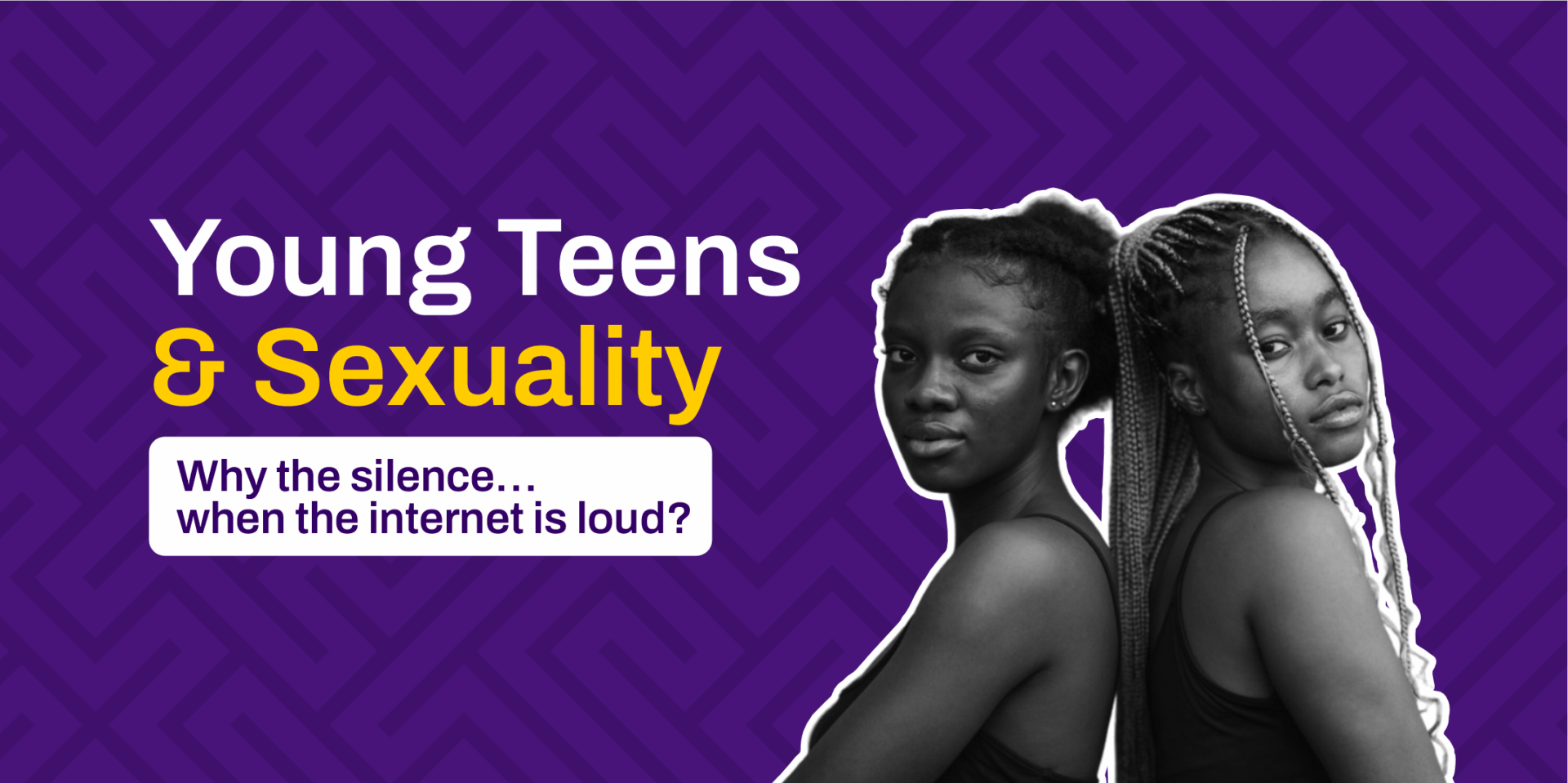
When it comes to seeking sexual and reproductive health information, which is one of the key areas explored, stakeholders in this study repeatedly describe the same pattern: very young adolescents are growing up in environments where sexual and reproductive health is present in lived experience, but absent in everyday conversation.
In their words; “We avoid discussing sexuality with adolescents.” “Young people learn from friends instead of trusted adults.” “They rely on the internet because no one explains these issues.” “Boys are encouraged to prove masculinity through sexual experience.” “Girls are expected to remain silent about sexual matters” “Talking about sexuality is considered inappropriate.” “Parents avoid these discussions out of cultural discomfort.” “Silence leaves adolescents to figure things out alone.
Parents hesitate. Schools avoid depth. Health facilities are often filled with judgment, confidentiality concerns, and limited adolescent-friendly services than by openness. Communities, too, rely on silence as a form of protection. So, adolescents like Ruqayya and Gbemisola learn in fragments through peers, through media, and through the internet. Sometimes it is correct or often incomplete. Other times, it is harmful. And in that gap between curiosity and guidance, risks such as early sexual initiation and engagement in unsafe sexual practices, misunderstanding of protection, and exposure without preparation set in. If adolescents are already learning from the world around them, then adults cannot stay silent. Parents, teachers, community leaders, health workers, and influencers all have a role to play as guides who show up, listen, and speak openly.
To learn more about Policy Innovation Centre’s findings from the “Landscaping the behaviours, drivers, and norms influencing the well-being of very young adolescents: an exploration of stakeholders’ perspectives in Nigeria,” click here.
The Very Young Adolescents Survey (VYAS), led by the Policy Innovation Centre and supported by the Gates Foundation, seeks to examine not only gender norms that reinforce poor sexual and reproductive health knowledge but also the interconnected issues including gender-based violence, child marriage, HPV vaccination, and women’s economic empowerment that shape health and wellbeing of adolescents aged 10 to 14 in Nigeria