
Call for Abstracts
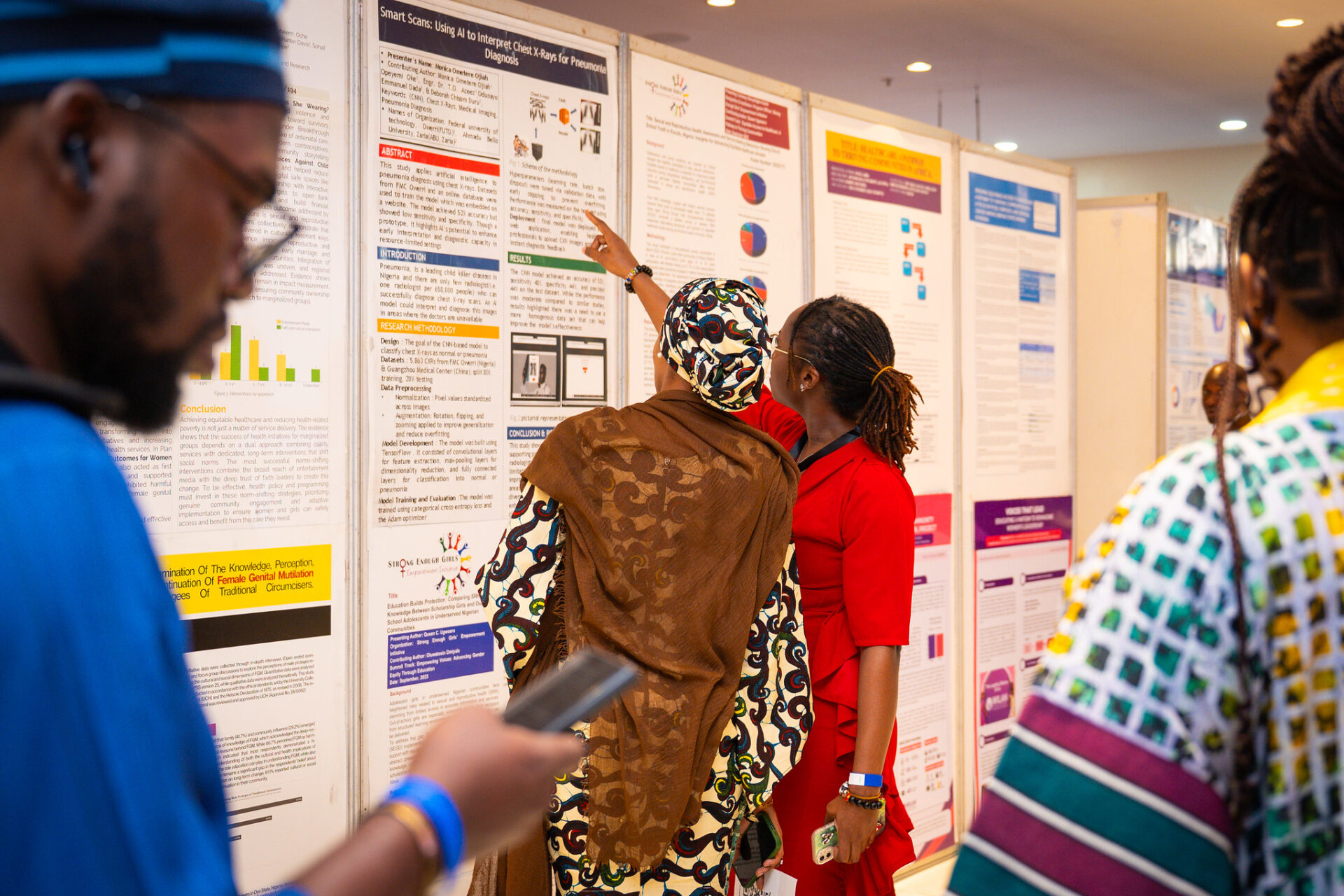
The Academic Summit is a dedicated platform within the Gender & Inclusion Summit 2026 that brings together researchers, academics, development practitioners, scholars, policymakers, and community-based organisations to share evidence-based work on gender and inclusion.
Held on Day Zero of the summit, the Academic Summit provides an opportunity for participants to present original research findings, policy innovations, programme implementation experiences, and practical lessons that contribute to advancing gender equality and social inclusion.
Accepted abstracts will be presented through oral presentations and poster sessions, and all presenters will receive a certificate of participation.
About the Call for Abstracts
The GS-26 Academic Summit invites submissions from individuals and organisations whose work contributes to knowledge, practice, policy, and innovation in gender and inclusion.
Submissions are welcome from:
- * Researchers and academics from universities and research institutions
- * Development practitioners from NGOs, civil society organisations, and international agencies
- * Government officials documenting policy innovation and implementation outcomes
- * Graduate students (Master’s and PhD candidates)
- * Private sector professionals with data-driven insights
- * Community-based researchers and grassroots organisations
Previous publication experience is not required. Individuals do not need to be affiliated with a university to submit. If the work is relevant, evidence-based, and aligned with the summit theme and tracks, it is eligible for consideration.
Summit Tracks
Submissions may address, but are not limited to, the following thematic areas:
Focus: This thematic stream explores the institutional, social, and political dimensions of gender inequality. Contributions may engage with gender-responsive governance, women’s leadership and political participation, legal and policy reform, gender budgeting, issues around gender-based violence, unpaid labor, social norms, masculinities, and transformative approaches to gender justice.
Focus: This area focuses on the structural and systemic inequalities that continue to exclude marginalized populations from development gains. Submissions may address issues relating to rural exclusion, disability inclusion, intersectional inequalities, conflict-affected populations, social protection systems, equitable service delivery, and justice-oriented approaches to development.
Focus: This thematic area welcomes submissions on equitable and inclusive approaches to health and human development. Topics may include maternal and child health, nutrition systems, mental health, community health models, healthcare access disparities, preventive health systems, digital health innovations, and broader questions of wellbeing and human capability.
Track 4: This area interrogates the role of knowledge in shaping development practice and public policy. Contributions may explore research uptake, knowledge translation, interdisciplinary collaboration, decolonizing knowledge production, African-centered development frameworks, ethics of development research, university-policy engagement, and the role of evidence in decision-making processes.
Focus: In this stream, contributions may address issues around climate adaptation, food systems resilience, sustainable agriculture, energy access, environmental justice, urbanization, transportation systems, rural connectivity, and resilient infrastructure for vulnerable populations.
Focus: Recognizing both the opportunities and risks associated with emerging technologies, this area welcomes contributions on digital governance, artificial intelligence and inclusion, data justice, ethical innovation, digital inequalities, civic technologies, inclusive digital infrastructure, and the implications of technological transformation for underserved populations.
Authors can select between two formats for their abstract, guaranteeing clarity and relevance to their work:
Option 1:
Research Abstracts
- Background: State the purpose/objective, hypothesis, or problem addressed.
- Methods: Describe the study period, setting, design, population, data collection, and analysis.
- Results: Present key findings and outcomes.
- Conclusions: Explain the significance, implications, and future directions.
Option 2:
Programme/Project Implementation Abstracts
- Background: Summarise the purpose, scope, and objectives of the programme, project, or policy.
- Description: Outline the period, setting, structure, key populations, activities, and interventions.
- Lessons Learned: Present findings, outcomes, and best practices, supported by specific results.
- Conclusions/Next Steps: Discuss the significance, implications, and recommendations for future work.
Submission Guidelines
Language: English only.
Originality: Submissions must be original and not previously published or presented unless substantially updated.
Format:
- ◉ Title: Times New Roman, 12pt, sentence case, centered, bold.
- ◉ Body: Times New Roman, 11pt, single line spacing, one column.
- ◉ No bullets, lists, headers, footers, citations, tables, figures, or references in the abstract.
- ◉ Word limit: 350 words.
Keywords: Please indicate 3-5 keywords (free text, maximum 25 characters per keyword). The keywords must be representative of the content of the abstract.
Authorship:
List full names and affiliations of presenting and contributing authors.
Grammar: Ensure proper grammar, spelling, and coherence.
Review and Selection Process
* All abstracts undergo a double-blind peer review by the abstract committee.
* Each abstract is scored on five criteria: background/objective, methodology/design, results/lessons learned, conclusions/next steps, and originality/contribution to the field.
* Abstracts will be reviewed by multiple reviewers, and scores are averaged for final selection.
* Selected abstracts will be published in the Book of Abstracts. Presenting authors will receive certificates.
10 outstanding abstracts will be selected for oral presentations; others will be presented as posters.
Timeline
Abstract Submission Deadline:
June 28, 2026
Notification of Acceptance (Poster):
July 27, 2026
Notification for Oral Presentations:
July 31, 2026
Summit Dates:
September 7–9, 2026

The Policy Innovation Centre (PIC) is the first national institutionalized behavioral initiative in Africa supporting government and stakeholders to make behaviorally informed decisions and generate evidence for impact driven interventions in critical thematic areas.
WHERE WE WORK
What We Do
+234 913 957 8643
ABUJA OFFICE
Plot 1524, Cadastral Zone B08, Jahi District, FCT Abuja.
LAGOS OFFICE
294 Borno Way, Alagomeji-Yaba, Lagos.
KANO OFFICE
Suite 4, Binta Dan Baffa Plaza, Ahmadu Bello Way, Kano
EDO OFFICE
2nd Floor Exquisite Plaza, #5 Evbuomwan Close, Etete GRA, Benin City.
Copyright 2025 – Policy Innovation Centre (PIC)